Campground etiquette: the unwritten rules that keep everyone happy
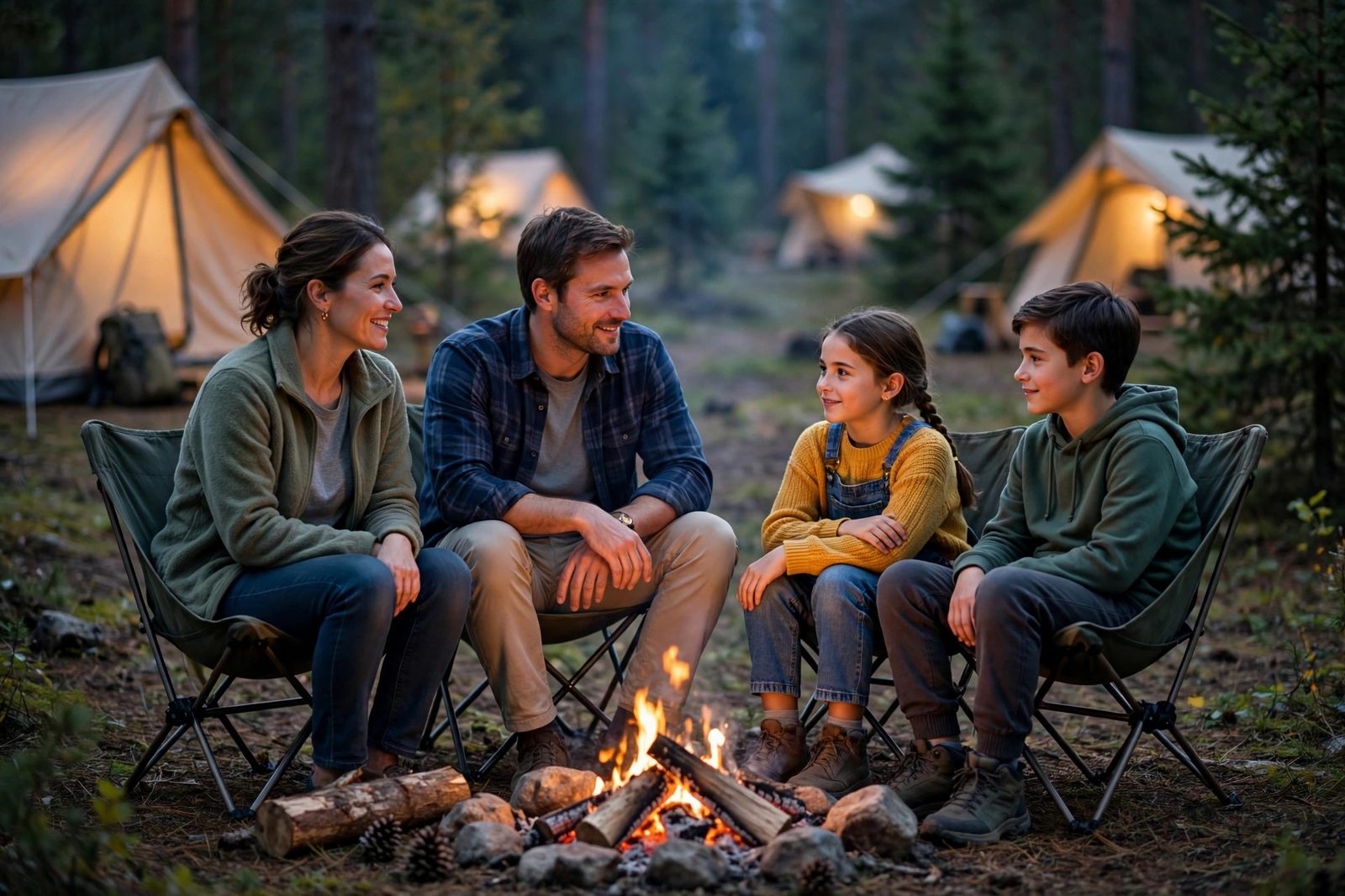
Campgrounds are shared space with thin walls, literally. Sound carries, light carries, and your site is about fifteen metres from someone else's. Nobody hands you a rulebook at check-in, but every regular camper knows the unwritten code. Here it is, written down.
Noise: the big one
Sound travels remarkably far at night in a quiet campground. What feels like normal conversation volume at your fire is someone else's 11 p.m. alarm clock. The essentials:
- Respect quiet hours, they're posted and enforced. Wind down before they start, not at them.
- Keep music personal. If anyone beyond your site can hear it, it's too loud. Earbuds exist for a reason. And many campgrounds prohibit amplified music entirely, check the rules.
- Mind the morning, too. Early risers: keep the 6 a.m. car-door slamming and equipment rattling to a minimum. Late sleepers: that's on you, but quiet hours protect the evening, not the morning, pack earplugs if you're a light sleeper.
- Generators: only during permitted hours, and never point the exhaust at a neighbour's site. If you don't need it, don't run it.
Light discipline
Your thousand-lumen camp light illuminates your site and everyone else's. Point lights down and keep them modest after dark. Headlamps on the red-light setting are the polite choice for late-night bathroom trips. And if you leave your site at night, turn off the big lights, nobody wants to stare at your empty, floodlit campsite.
Your site is yours; everything else is shared
- Don't cut through other sites. It's tempting, but a stranger's campsite is their temporary front porch. Walk around, not through.
- Keep kids and dogs in your area. Friendly dogs and curious kids still need boundaries. Leash rules exist everywhere for a reason, follow them, and clean up after your pet without being asked.
- Shared facilities are shared. Rinse the dish station, don't monopolize the shower during the morning rush, and leave the bathroom cleaner than you found it. This is the golden rule of campgrounds.
- Wood, water, and Wi-Fi, if the park provides it, don't hoard it. Take what you need, leave the rest.
Fire rules are etiquette and safety
Campfire etiquette starts with checking for fire bans, if one is in effect, there is no "just a small one." Keep fires inside the provided ring, burn only appropriate wood (never trash, never treated lumber), and keep the fire modestly sized; a bonfire that showers sparks is a menace, not a party. Never leave a fire unattended, and put it fully out before bed: drown, stir, drown again, and check it's cold to the touch. Smoke drifts, if the wind is blowing your fire's smoke straight into a neighbour's tent, reposition or downsize.
Wildlife: your habits affect everyone's safety
This is where etiquette becomes a genuine safety issue. In any area with bears, raccoons, or other food-motivated wildlife:
- Store all food and scented items securely, locked in your vehicle or a provided locker, never in the tent, never left out on the picnic table "just for a minute."
- Never feed wildlife, deliberately or accidentally. A fed animal becomes a bold animal, and bold animals get relocated or destroyed, because of your granola bar.
- Clean your site. Crumbs, grease on the grill, unwashed dishes left overnight, all of it teaches animals that campsites are food sources, which endangers the next campers on your site.
Arriving and leaving
Arrive in daylight if you can, setting up in the dark is when you're loudest and most likely to need your neighbour's help (or forgiveness). When you leave: do a final sweep for trash, micro-trash, tent stakes, and gear; extinguish the fire completely; and leave the site as you'd want to find it. Check-out times exist so staff can prep the site for the next camper, don't be the reason someone's weekend starts late.
The whole code boils down to one sentence: act like your neighbours can hear and see everything you do, because they can. Campgrounds run on consideration, and the considerate campers are the ones everyone hopes to be parked next to.